
Forum for East Asia - Latin America Cooperation have done nothing to help the forced
- Bulatlat

- Jun 17, 2025
- 3 min read
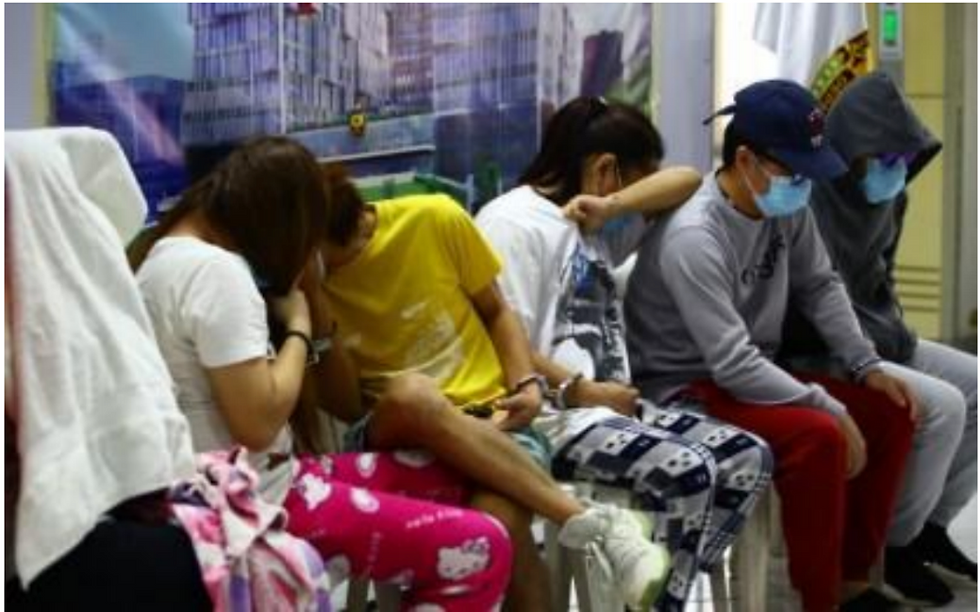
“We have not done anything to save the people who have already been human trafficked,” the delegation of Brazil in the Forum for East Asia - Latin America Cooperation (FEALAC) stated proudly in an interview with Bulatlat.
Human trafficking in the Philippines is one of the largest victim populations in the world with an estimated 784,000 people living as modern-day slaves. Although Philippines currently ranked as a Tier 1 country by the US Department of State in human trafficking, which states that a country has fully complied with The Trafficking in Persons Act’s minimum standards for the elimination of trafficking,The Philippines has yet to reduce their constant human trafficking.
Philippines suffers from multiple variations of modern human trafficking, which can target both women and children, which can be sex-trafficking, child labour & trafficking, scam operations in Philippine Offshore Gaming Operators (POGOs) and exploitation of Overseas Filipino Workers (OFW).
Despite all the cries from the affected and fears from human trafficking, only then did the government try to do something in the Forum for East Asia - Latin America Cooperation. A solution was proposed in the forum, with the delegates of Philippines, Cuba, Thailand, and Singapore leading the Protect, Prevent, Prosecute (PPP) solution, whereby it helps prevent the possibility of human trafficking in every country under FEALAC.
However, nothing was solved, and was contradictory to what the Philippines have shown us through their actions. Our selfish government of the Philippines decreased the efforts to protect victims and had a lack of a reliable mechanism to consolidate statistics on the total number of victims identified and assisted, just because the government wants to focus on something else more “important”.
Even though all the solutions given by both FEALAC members and the Philippines included were somewhat helpful to the possible human trafficking or those who initiate human trafficking groups, it still has not yet solved the modern slavery that spreads across the entire country of Philippines.
FEALAC has exploited their time to only discuss what they can do to prevent labour-inducing and sex trafficking, and they have never talked about modern trafficking and how to provide aid for those who have already been trafficked.
“We are planning to help trafficked victims through reskilling in order for them to have more job opportunities,” the delegate of Brazil stated in an interview with Bulatlat after a question that asks about actions done to help trafficked victims and trafficking groups.
The trafficked will not follow what they proposed, because they have been promised that before but were faced with sexual assault and kidnapped, falling for a trafficking group. Scams frequently start on social media, where recruiters exploit messaging applications to lure potential victims and promise high-paying jobs abroad. Due to this, their trust towards anyone at this point are diminished and are very difficult to rebuild, even with the idea of care packs and rehabilitation proposed by the delegates of Singapore and Thailand.
Moreover, with Philippine’s history of not caring about the females that have been sex trafficked, who were just looking for jobs to support their poorly paid families, there is practically nothing done about human trafficking in ASEAN.
“Pag di kayo naka-reach ng quota, ibibilad nila kayo sa araw tapos may mga times na wala kayong morning break almost 17 hours kami nagtatrabaho dun babad kami sa work, [If you don't reach your quota, they'll put you out for the day and then there are times when you don't have a morning break. We work almost 17 hours a day, so we're soaked in work.] ” the victim shared.
Written by Kenice Leow ke Ying, Mirza Adriansyah Bin Muhmmad Syariff and Rabe Ralph Yohan Ledesma


Comments