
Forum of East Asia-Latin America Cooperation discusses solutions on human trafficking
- Bulatlat

- Jun 17, 2025
- 3 min read
Opinion | Human Rights
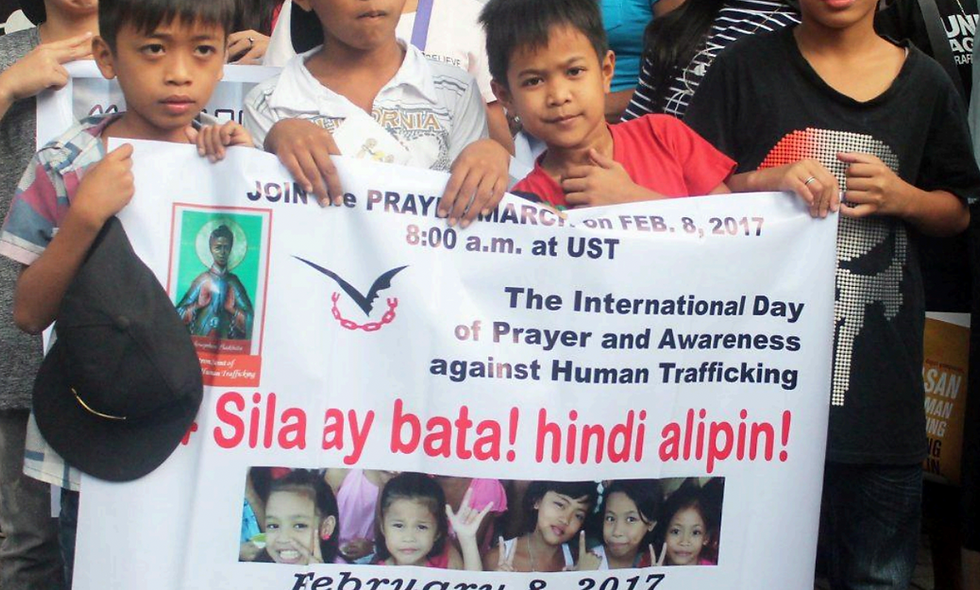
“I was desperate to help my husband so we can pay off our debts, and look how I ended up. I cannot believe I have done this,” said ‘Anna’, a victim of human trafficking, in Filipino.
On 16 June 2025, foreign ministers within the Forum of East Asia-Latin America Cooperation
(FEALAC), including that of the Philippines, were discussing the topic of human trafficking.
A prominent inter-regional problem, human trafficking has its negative impacts on human lives, directly violating human and civil rights in multiple countries. Bringing forth solutions to mitigate human trafficking in the FEALAC will be beneficial for inter-regional cooperation and
to advocate for better human rights.
The Philippines is acknowledged to have ‘tier 1’ efforts in compliance with the Trafficking Victims Protection Act’s standards, indicating that local authorities are making efforts to combat trafficking.
However, human trafficking continues to be a persistent issue within the nation and for Filipino immigrants overseas.
Are government actions enough to tackle human trafficking on their own?
A mix of corruption and negligence. These are what make it difficult to mitigate the problem of human trafficking for Filipinos.
In 2023, when Filipino survivors of human trafficking in Syria filed complaints against an
ex-Philippine ambassador to actively demand accountability and reparations from the
government, they were met with a futile response, and no appropriate action was taken towards their plight. In the words of Arman Hernando, the chairperson of the group that filed these complaints;
“We call on the Marcos Jr. administration to order, without any further delay, all the assistance, services, and justice they have long been denied; and to discipline Lamadrid and all his partners and accomplices in crime.”
Within the country, local police have been known to guard brothels and even procure children for prostitution. NGOs have complained that the local political and legal establishments protect child molesters, sometimes even including law enforcement.
On the same note, the United States Embassy in the Philippines stated that some officials
condone immunity from justice for those who exploited, trafficked women and children.
It is evident that local authorities’ efforts in mitigating human trafficking are insufficient, and the law seems to be hypocritical in its ethics regarding the issue at hand.
FEALAC thus provides a medium for the Philippines to discuss human trafficking with other countries in the hopes of addressing human trafficking.
Solutions proposed in the FEALAC are said to address the root causes of human trafficking
Multiple solutions were raised during the conference, acknowledging the supposed ‘root causes’ that contribute to the issue of human trafficking. This includes poverty, a lack of human rights, oppression, and poor law enforcement.
The foreign minister of Cuba has proposed a task force dedicated to identifying and thus
reducing cases of human trafficking between regions in the FEALAC, said to be a 2-phase
approach that helps to contain human trafficking.
The usage of A.I drones was also brought up to detect signs of human trafficking. However, the practicality of such a solution is questionable regarding its regional limitations, fundings and whether it breaches the sovereignty of other countries. Capacity building will be an indispensable asset for such solutions to take effect.
The Philippines' foreign minister has also proposed a framework that encapsulates these solutions, such that there is a proper and clear foundation within FEALAC for these solutions to take place.
Named ‘Prevention, Protection, Prosecution’ and abbreviated as the ‘PPP’, it seems that the discourse of the FEALAC has made considerable progress in addressing human trafficking. Human trafficking continues to be widespread in the East Asian and Latin American regions, affecting many lives of vulnerable groups that despite efforts to save have gone in vain. The discussions and emphasis on potentially feasible solutions within the FEALAC are a step forward in mitigating human trafficking.
All in all, these solutions should be more evaluated, as human trafficking seems to be an
incessant and complex problem. The Philippines seems united, but not trusted within.
Written by Kenice Leow ke Ying, Mirza Adriansyah Bin Muhmmad Syariff, and Rabe Ralph Yohan Ledesma


Comments