
How will the equation YINUO+ + OREO come about?
- The Korea Times

- Jun 18, 2025
- 3 min read
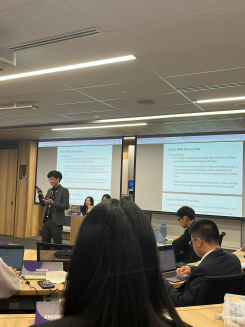
South Korea has played a pivotal role in developing regional energy and mineral cooperation, emphasising the importance of efficient and transparent grid cost structures. South Korea also underscores the important need for a resilient, transparent, and sustainable mineral supply chain to support the clean energy transition.
At the ASEAN Ministers on Energy Meeting (AMEM), South Korea has aligned itself with key multilateral initiatives. These include the Standardization in Grid Monetary Costs and Transparency (SIGMA) convention, alongside New Zealand, Japan, and the Gulf Cooperation Council (GCC), and the Optimizing Resources for Extraction and Oversight (OREO) framework with Japan.
The OREO framework focuses on enhancing mineral processing capabilities while managing the environmental impacts of mining. It promotes collaboration with mineral-rich ASEAN member states such as Indonesia, Vietnam, and the Philippines. The framework facilitates the establishment of shared access facilities for mineral refining, in which Japan commits to investing in new or expanded refinery infrastructure. These projects are typically supported by public-private partnerships involving JBIC loans or JOGMEC equity financing. Japanese firms are expected to contribute clean-tech refining technologies, with capacities scaled to meet regional demand.
Under this model, ASEAN countries without domestic refineries can sign agreements to export raw minerals to these shared facilities, receiving a guaranteed proportion of the refined output in return. For example, Laos could export 1,000 tons of rare earth ore and receive 30% of the resulting rare earth oxide—ensuring material returns while accessing advanced refining infrastructure.
Long-term capacity building is a core component of OREO. Japan has proposed technical training programs for ASEAN engineers and environmental managers, which will be coordinated through a regional network of mineral research institutions under JAMRI. This initiative aims to help ASEAN transition from being primarily a raw material exporter to a regional processing hub.
In return for enhanced transparency and oversight of mining operations, Japan and South Korea will assist in the co-development of new sustainable mining technologies. A joint monitoring body—comprising legal, technical, and environmental experts with equal representation from ASEAN member states—will oversee mining activities, ensuring accountability and best practices.
This increased transparency is made to foster trust between ASEAN and observer states, ensuring equitable participation across the mineral value chain.
In parallel, the framework supports the development of clean energy infrastructure as part of the regional mineral supply chain. Japan, South Korea, and other willing observer states will help ASEAN countries develop clean energy systems using locally sourced minerals.
The aim is to boost the upstream economy, facilitate technological innovation, and promote sustainable growth. Observer states are expected to export green energy infrastructure to ASEAN without tariffs, accelerating the development of ASEAN’s green power grid and solidifying its regional energy infrastructure.
The YINUO+ initiative is projected to generate up to US$2 billion in annual revenue through refined product sales. It also aims to train over 5,000 ASEAN professionals within five years, strengthening regional labor markets. By implementing standardized maintenance protocols and certifying technical specialists, the framework seeks to reduce unplanned industrial downtime by 35%.
YINUO+ also places strong emphasis on environmental safeguards. Processing parks are expected to adhere to AASMF standards to minimize tailings risks and water contamination. In addition, consistent product specifications are designed to appeal to high-value buyers in Europe, North America, and China—potentially yielding price premiums of 10–15%.
Co-located research and development centers will accelerate technological innovation in refining efficiency and circular economy models, further enhancing the competitiveness of ASEAN’s mineral processing sector.
South Korea recognizes the differing perspectives and advantages of both YINUO+ and OREO. Each framework aligns with long-term national and regional priorities, from economic development to environmental sustainability.
At the AMEM, ministers from Australia, the GCC, Russia, and India expressed keen interest in contributing to both YINUO+ and OREO. While the frameworks differ in structure and emphasis, YINUO+ focusing on revenue generation and industrial training, and OREO prioritizing transparency and shared facilities—they are not mutually exclusive.
The AMEM aims to integrate the strengths of both initiatives. The goal is to establish a comprehensive, multilateral resolution that balances efficiency, sustainability, and equity across the region’s critical mineral and energy sectors.
Written by Faith Child, Toh Jia Ying, and Tan Hern Ern Maitri


Comments