
Taxes and tariffs makes women and farmers suffer to “protect” their trades
- Bulatlat

- Jun 19, 2025
- 3 min read
Trade protectionism are government policies and actions taken to restrict or limit international trade in order to protect domestic industries from foreign competition, which are largely liked by the countries that are developing.
This is so that they are able to maintain local employment levels, and not depend on foreign suppliers during times of conflict or tension. Thus, countries are able to grow until they can compete on a global scale, prevent the entry of goods that do not meet domestic health, safety, or environmental standards, and protect consumers and the environment.
This highly benefits the marginalized groups in the Association of Southeast Asian Nations (ASEAN) region, whereby small business groups can have an ease in entering export markets and small exporters in diversifying their product and market portfolios.
On the other hand, Free Trade Agreements (FTAs) are where two or more countries commit to opening up their markets to one another by lowering or removing tariffs, quotas, and other trade barriers, which are liked by the money-minded, elitist, and biased countries that want more multinational corporations and foreign industries to invest in them and increase business efficiency. To add on, countries that love the idea of free trade are sacrificing our home market on the altar of free trade and we are condemning ourselves and our children to a future of fewer competitive businesses, fewer good jobs, less opportunity, and a lower standard of living. Rather, these high paid jobs are being sent towards the more elite in the economy, where the rich get richer.
This can immensely affect the agricultural sector whereby FTAs are often used by corporate agribusiness to force open markets for their agricultural products. Nearly a third of our hard-working farmers earned incomes low enough to fall beneath the official poverty standard set by the government.
While the Philippines are on the fence with both the idea of trade protectionism and free trade, like how they have been doing between China and the United States of America (USA), Philippines in current days are shifting towards free trade, whereby Felipe Medalla has stated, “The Philippines’ long-held protectionist mentality is being eroded, as many are coming to realise that all these restrictions are not really very good for the economy or for the Filipinos themselves.”
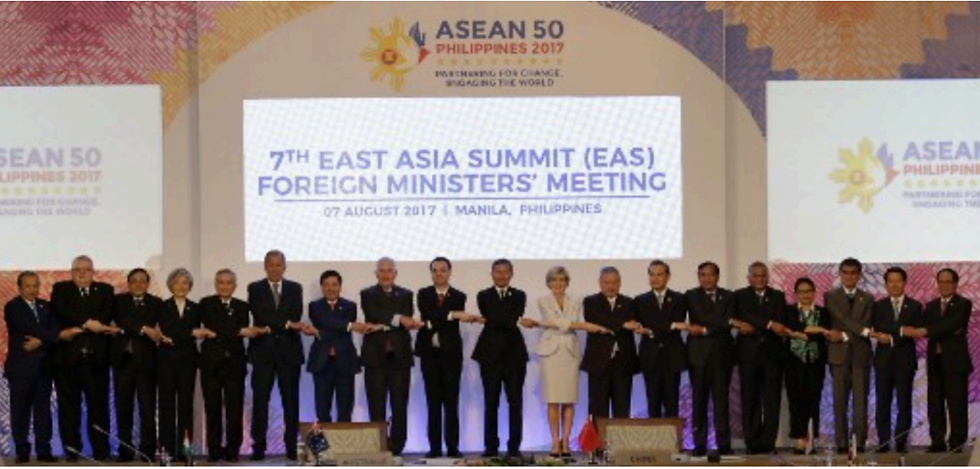
This can be seen when in 2010, ASEAN members, including the Philippines, have consolidated all Common Effective Preferential Tariff/ASEAN Free Trade Area (CEPT/AFTA), and seeks to establish a single market and production base with a free flow of goods in the ASEAN region, a major component of the ASEAN Economic Community (AEC).
This is a major downturn for all groups in the Philippines, because, as stated before, FTAs are favouring the major companies, rather than small businesses that are trying to survive in the harsh economy of the Philippines. Furthermore, with more and more FTAs being established between the Philippines and another country, it causes more politicians to be encouraged and throw out more sectors under free trades, whereby they would state that free trade will increase access to higher-quality foreign goods and lower prices as governments reduce or eliminate tariffs.
Luckily, before everything goes haywire, the Philippines has yet to target the agriculture sector, as the Philippines maintains a two-tiered tariff policy for sensitive agricultural products, including rice, corn, pork, chicken meat, sugar, and coffee. This safeguards our farmers from the exploitation of the higher-ups.
Overall, ASEAN is striving to be "100 percent tariff-free" within its free trade area, which was said by Singapore’s Prime Minister Lawerence Wong. This is detrimental to the marginalized groups as there won’t be any protection against their economy, making each country in ASEAN susceptible to economic downfall and heavy reliance on each other.
“I have paid my taxes all the time I have lived here,” said a domestic worker, who plans to save enough money, but still struggles to even save a little bit of money.
Despite this topic being so called “unnecessary” since it has already been discussed, and that free trade has already been solidified in ASEAN, it still does not negate the fact that farmers and other marginalized groups suffer greatly from the greed of the higher ups. Next time, when you think of free trade, think of all the hard-working marginalized and underpaid people, who earn very little because of the idea of free trade.
Written by Kenice Leow Ke Ying, Mirza Adriansyah Bin Muhmmad Syariff, and Rabe Ralph Yohan Ledesma

Comments