
Child labour in ASEAN: Rosenau’s take on intervention and the role ASEAN can play
- Kyodo News

- Jun 18, 2025
- 4 min read

Ask any parent in Southeast Asia what they want for their children and the answers are probably universal: safety and the chance to learn. Yet more than four million boys and girls across ASEAN still spend their days in fields, factories, or trawlers instead of classrooms. Regional leaders agree this must end, but one obstacle lingers: how far is far before help starts to look like meddling?
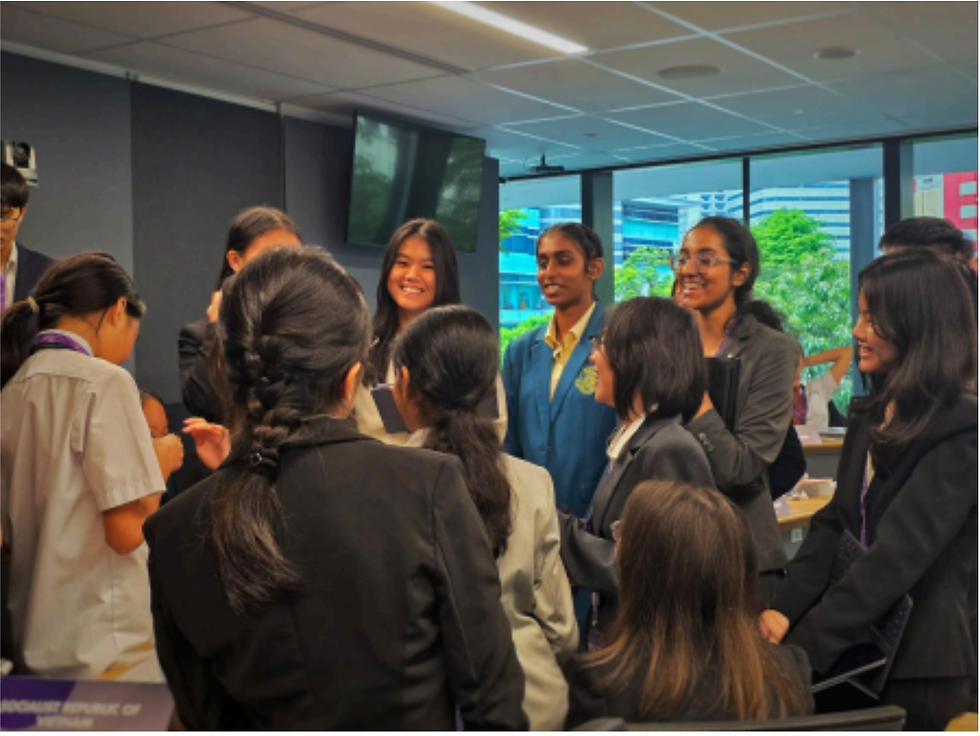
Political scientist James Rosenau offered a useful yardstick. Speaking at a Princeton conference decades ago and upon being reminded of his work at the recent Taster Classes as part of YMAX 2025, he insisted that real intervention is not a vague moral push. It is a convention‑breaking act that begins and ends within clear limits and aims squarely at the power structures that keep a problem alive. By that test, most of ASEAN’s current efforts, such as statements and most of the time gentle peer persuasion, amount to encouragement, not intervention.
For years the bloc has relied on what Rosenau called communicative pressure: joint declarations and guidelines funded by donors such as Japan. These steps matter; they raise awareness and create room for activists to speak. But in the seafood hubs of Thailand, the plantations of Malaysia, and the garment clusters of Cambodia, inspectors still meet locked gates or ledgers scrubbed clean before they arrive. Families who need the wages have little leverage to refuse. Awareness alone is not changing the desperation faced by these locals.
Global supply chains are tightening standards. European buyers already demand proof that goods are free from child labour, and Japanese retailers are moving the same way. If ASEAN cannot demonstrate credible enforcement, orders will simply shift elsewhere, leaving ethical suppliers—and exploited children—worse off. A narrower, Rosenau‑style definition of intervention helps because it clarifies what tools are on the table and when to use them.
Breaking convention need not mean storming borders which is clearly the epitome of intervention. But it could be as simple as publishing an independent risk index that ranks industries by the likelihood of child labour or taking from the proposal by Laos, simply incorporate whistleblowing mechanisms in ASEAN. Give companies six months—the clear beginning and end Rosenau demands—to clean up or face higher tariffs under the ASEAN Trade in Goods Agreement. Link those tariffs to measurable improvements, and the pressure becomes authority‑oriented: it falls on the officials and firms who can change the rules, not on the families trapped by them.
Tokyo funds almost half the region’s child‑labour programmes and provides technical advice on digital wage‑tracking and teacher training. Yet Japanese diplomats tread lightly, wary of crossing ASEAN’s red line against “internal interference.” A Rosenau framework may actually reassure: if measures are aimed to help governance, not regime change. By doing so, they can sit comfortably alongside Japan’s principle of respectful partnerships.
Critics hear the word sanction and picture blanket bans that could impoverish the very households they aim to help. A calibrated and nuanced approach avoids that trap. Combine transparent rankings with targeted loss of trade perks and mandatory reparations funds that pay for school fees and community clinics whenever violations are found. Pair pressure with assistance. This goes to show that hard rules and soft support are not mutually exclusive nor opposites. In fact, as Science says, unlike poles attract, let these mechanisms strengthen each other.
When Japan confronted its own child‑labour crisis in the 1950s, success arrived only after factories faced inspections backed by export penalties. The lesson is not that every penalty works, but that clear consequences turn ethical talk into action. ASEAN can adapt that playbook without betraying its commitment to consensus.
Ending child labour is not a charity project; it is a test of political will. Rosenau reminds us that intervention, properly defined, is less about intrusion than accountability. Set the terms clearly, apply them fairly, and children will feel the difference long before diplomats finish the next communiqué.
Written by Yu Ho Lam Winston, Xie Zhenyue Dora, and Aidan Ng (Huang Qirui)
Bibliography
Association of Southeast Asian Nations (ASEAN). ASEAN Declaration on the Protection of Children from All Forms of Online Exploitation and Abuse. 2019. https://asean.org
European Commission. Due Diligence Requirements in Supply Chains. Brussels: European Union, 2021. https://ec.europa.eu
Halliday, David, Robert Resnick, and Jearl Walker. Fundamentals of Physics. 10th ed. Hoboken, NJ: Wiley, 2014.
International Labour Organization (ILO). Child Labour in the Supply Chain: Challenges and Responses in Southeast Asia. Geneva: ILO, 2020.
International Labour Organization (ILO). Japan-ILO Partnership Programme in Asia and the Pacific: Combating Child Labour. ILO Regional Office for Asia and the Pacific. https://www.ilo.org/asia/publications/WCMS_764371/lang--en/index.htm
Japan External Trade Organization (JETRO). Responsible Business Conduct Guidelines for Japanese Companies Operating Abroad. Tokyo: JETRO, 2022. https://www.jetro.go.jp
Molony, Barbara. “Activism and the History of Child Labour in Japan.” In Gendering Modern Japanese History, edited by Barbara Molony and Kathleen Uno, 275–300. Cambridge, MA: Harvard University Asia Center, 2005.
Rosenau, James N. Turbulence in World Politics: A Theory of Change and Continuity. Princeton: Princeton University Press, 1990.


Comments