
Thailand Takes Inspiration From AMMSWD to Solve Child Labour; Advised Not To Blindly Follow
- The Nation

- Jun 18, 2025
- 3 min read

While Thailand expresses their ambition to implement AMMSWD’s proposed solutions, reality proves it to be more of a challenge than expected.
A child ought to be filling colouring sheets in preschools, eating nourishing lunches, and growing up safely in a loving home — not exposed to noxious chemicals, sex-trafficked, or subjected to working laborious hours. Yet, this remains an issue that Thailand has long needed to address.
Thailand’s dauntingly high child labour rates pose an immense threat to children’s education and rights. Hundreds of thousands of children in the country have been subjected to some form of child labour. By depriving them of proper education, prospective job opportunities are a distant reality for them, and they are doomed to a cycle of intergenerational poverty.
While the country currently has solutions for the issue, the grip that child labour has on children and parents alike still remains, exposing the solutions’ inefficiency. Recognising the utmost importance of taking action, the Minister of Thailand has expressed their will to adopt some of the policies that were brought up in the Draft Declaration.
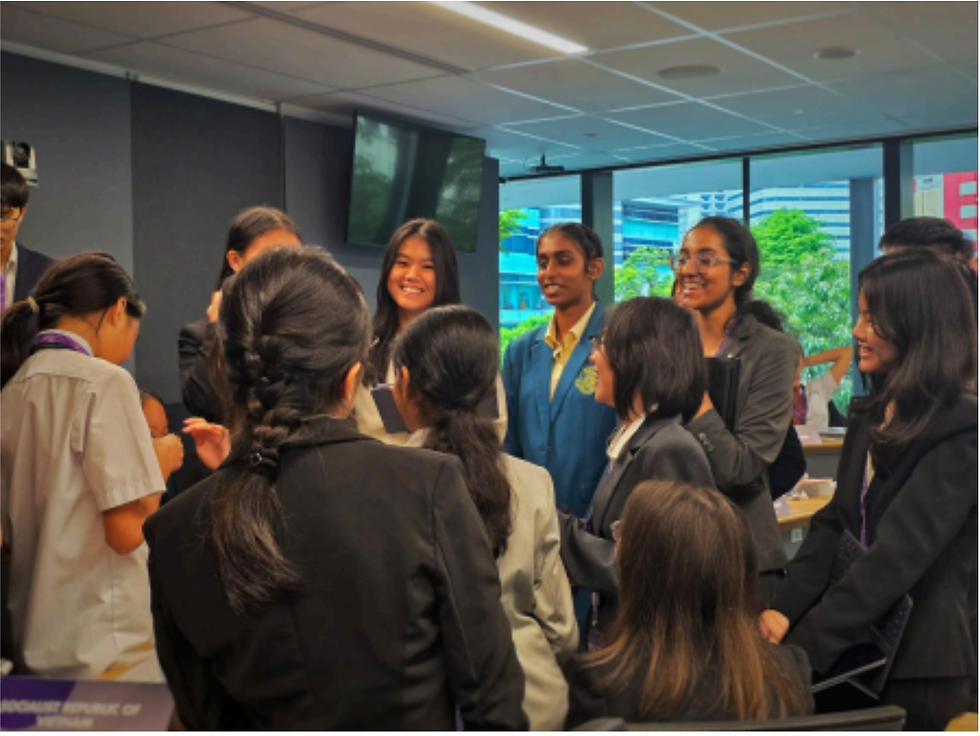
Within the ASEAN Ministers Meeting for Social Welfare and Development (AMMSWD), a Draft Declaration was introduced after 2 days of debate. To hinder the development of the child labour industry, the document had 5 main goals:
Improving the classification of child labour.
Coordinating non-governmental organisations.
Improving transparency.
Addressing migratory child labour.
Preventing children from getting into child labour.
Although the declaration failed to pass, one of the main initiatives that the Thai government wants to commit to is the Legislative Initiative for Monitoring Inspections (LIMITS), manifesting in a 3-step approach to aid in the identification of child labour victims.
Firstly, technology will be developed to better monitor the attendance of children in schools. Secondly, major informal workplaces (i.e. farms, markets) will have increased time-log inspections to spot excessive hours of work. Thirdly, digital reporting tools will be developed to allow local teachers and health workers to log signs of fatigue and burn out in children.
This approach is expected to further improve the dire circumstances of Thailand’s child labour situation, and it is a commendable effort on AMMSWD’s part for coming up with it. Of course, there are still obvious flaws, causing the declaration to fail to pass.
Notably, areas like research and development, trial and error and more can be a costly investment. Moreover, over half of the working population in Thailand can be categorized into the informal sector. Since the government cannot possibly be everywhere at once, an immense amount of resources is needed, and it will be difficult for the Thai government to allocate this many resources to this cause.
It will also be difficult to only rely on ASEAN for this, since little has been specified on funding in the Draft Declaration, other than having an NGO subcommittee. Although, to think that the NGO will be sufficient is a far reach. Without a passed Draft Declaration, collaboration between ASEAN member states may not manifest.
Also, on identifying signs of child labour, local teachers and health workers would need training to use digital reporting tools. This takes time and money — and time is something Thailand cannot afford in this crisis.
Crucially, the current culture surrounding child labour needs to change. Through a kid’s eyes, speaking out could culminate in job loss, worsening their financial situation and merely adding fuel to the fire. If not, they might also be forced into silence by their parents.
After much analysis, it is inevitable that we would question: will this truly be enough?
Thailand needs to improve the accessibility of schools, not just monitor them. Families are faced with impossible decisions when their wallets are empty. Unable to afford school fees, they drag them into farms and factories in desperate attempts to stay afloat. If the price of textbooks drops, interest in schooling will indisputably rise.
In another world, perhaps toddlers won’t be begging on the streets. Maybe young children will be enjoying their childhood, going to school and making friends instead of having to put up with long hours of grueling labour just to get by. These children deserve better, and if Thailand acts right now, this world might just be in our near future.
Bibliography
International Labour Organization. “Child Labour and Lack of Quality Education in Rural Communities in Myanmar,” February 24, 2024.
National Statistical Office of Thailand, Ministry of Labour, and International Labour Organization (ILO). “National Working Children Survey 2018 of Thailand,” 2018.
Post Reporters, “Over Half of Thai Workers in Informal Sector,”
Https://Www.Bangkokpost.Com, December 19, 2023.
Victoria, “Child Labour in India | Action Education,” Action Education, January 15, 2024. https://action-education.org/en/child-labour-in-india-2/.
Written by: Genevieve Wee Shi Yun, Canada Alexa Joeve Devela, Alexa Ng


Comments