
U.S. Offers Expertise Instead of Funds Amid Shifting Sports Scene; A Chance for Thailand Emerges in AMMS
- The Nation

- Jun 17, 2025
- 3 min read
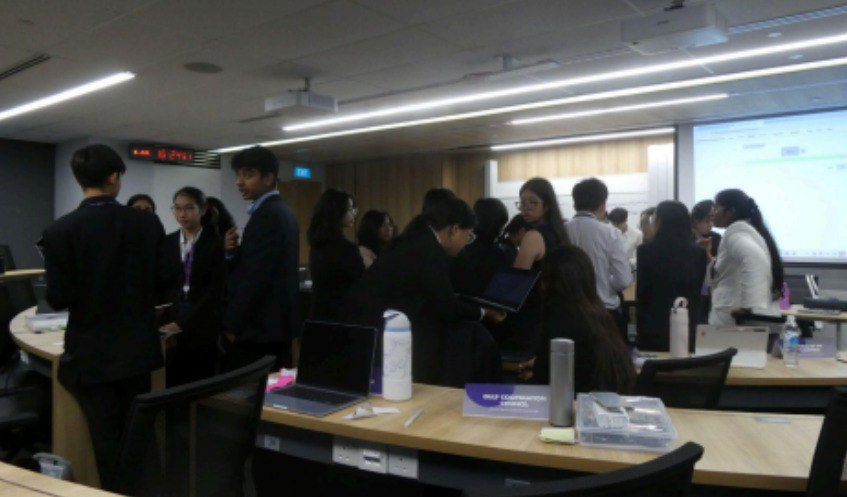
During interviews, the U.S. clarifies its position on funding for potential ASEAN schemes, and Thailand surprisingly expresses willingness to offer its facilities.
As debate ensues in the ASEAN Ministers Meeting on Sports (AMMS), delegates have moved beyond circular debate, exploring new solutions, such as the following prominent ones:
A multi-tiered grassroots program, jointly coordinated by Timor-Leste, Singapore and Malaysia. The program involves sending lower-level coaches from ASEAN countries to the Gulf Cooperation Council (GCC), equipping them with the necessary coaching skills, and then sending them back to their countries to teach this to the local coaches.
The ASEAN Unity Cup, hosted by Singapore. It entails smaller games hosted more frequently than the regular SEA Games, and aims to develop greater bonds between the ASEAN countries.
Developing an ASEAN Sports Governance Council, which manages an ASEAN sports development fund. The ASEAN Sports Governance Council will also decide on a consolidated roadmap for sports development in ASEAN.
These solutions, however, require an exorbitant amount of funding, an issue that has not been discussed thoroughly in council debate.
The Singaporean Minister stressed the importance of this: “We need a starting fund for the development of sporting infrastructure and scholarships… The ASEAN community will recognise sporting more and the culture will shift to more local investments.”
The ASEAN sports development fund will need a huge sum of money from investors in order to give every country an equal shot at developing their athletes.
Nonetheless, there is no guarantee that their funding will be sufficient, nor can they be sure that it will come to fruition.
Currently, the U.S. is unable to provide monetary investments for this cause. This is due to most of their budget being allocated towards security and sovereignty concerns, including the likes of prioritizing America's security sector in the national budget, and Trump’s tariffs. The delegate of the U.S. in turn touches on how it can contribute in other aspects.
“While (the U.S. 's) direct monetary contribution may be limited at this time, it is investing in partnerships, knowledge-sharing, and infrastructure access,” said the minister of the U.S..
With the U.S. out of the picture, ASEAN is now required to look inwards for funding. Singapore and Malaysia cannot be the lone providers of funding and resources — it is essential that other nations in the region put in more effort to expand sports development.
Other than contributing through financial means, these nations can also volunteer their own resources.
Thailand regards itself in an ideal position to carry this out. In a candid exchange, Thailand brought up the fact that it has a lot of quality sporting infrastructure, and the minister further discussed leveraging them.
“With our better developed sports infrastructure, Thailand is keen to make use of our facilities to host future ASEAN sports events — including initiatives such as the ASEAN Unity Cup,” the Thai minister proposes.
“Furthermore, should Timor-Leste’s standardised training for coaches be decentralised from the GCC, we are open to supporting such programs by making our facilities available for regional training and development purposes.”
Not only can their developed sports infrastructure serve as venues for sporting events and training, but Thailand can also seize this chance to guide other countries in constructing similar facilities. They can teach other nations in the region how to keep within a relatively low budget, how to manage the logistics, and more.
By utilizing their various private sectors, Thailand can also secure funding, assist in event organization, establish public partnership programmes, and more. These investment systems already serve as key players in national sports development, such as the “One Sport, One State Enterprise”, a partnership between private sectors and sports associations. The partnership helps to provide sporting associations with crucial funding so that they can operate. With this in mind, it is now prime time for the Thai Sports Minister to step in and drive reform in regional sports.
As the U.S. withdraws from its typical role of a major contributor to these initiatives, Thailand now has the opportunity to step into the limelight. All eyes are on them, and The Nation looks optimistically towards the country leading a new era of sporting excellence.
Bibliography
Mail, Pattaya. “Thai Government Revamps Sports Funding Initiative.” Pattaya Mail, October 25, 2023.
Nationthailand. “Thailand May Develop Major Sports Complex in EEC.” Nationthailand, January 7, 2025. https://www.nationthailand.com/news/general/40044912.
Vought, Russell T. “Letter From Russell T. Vought to the Honorable Susan Collins Regarding President Trump’s Recommendations on Discretionary Funding Levels for Fiscal Year 2026,” May 2, 2025. https://www.whitehouse.gov/wp-content/uploads/2025/05/Fiscal-Year-2026-Discretionar
y-Budget-Request.pdf.
Written by: Genevieve Wee Shi Yun, Canada Alexa Joeve Devela, Alexa Ng


Comments