
Uplifting the sports scene in ASEAN
- The Jakarta Post

- Jun 18, 2025
- 3 min read
The Minister of Singapore spoke to The Jakarta Post’s Mary Tok recently about central themes regarding proposed sporting frameworks, further supported by an excerpt from the Minister of South Korea.
Editorial board (The Jakarta Post)
AMMS
Tues, June 17, 2025

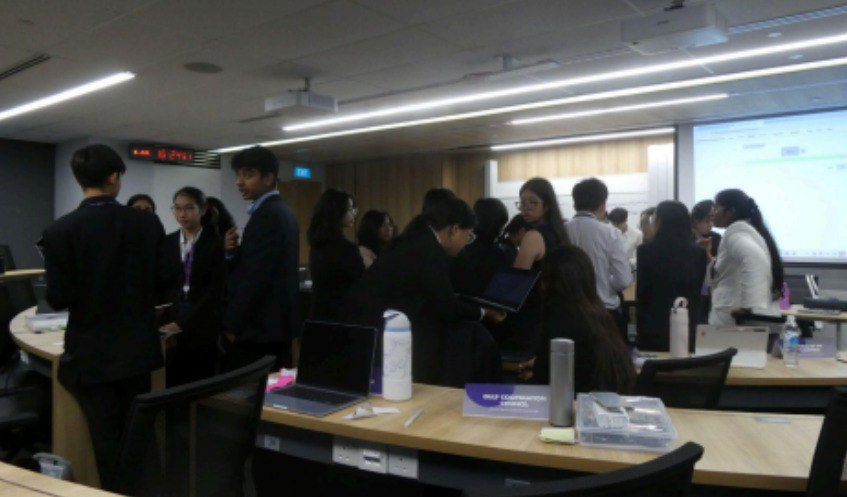
As an upstanding nation from ASEAN, the Minister of Singapore made waves in the Asean Ministerial Meeting on Sports (AMMS) on June 17. Explicating anti-corruption policies and raising coaching standards in sports, the minister tackles key issues that have been plaguing the ASEAN sports scene.
Question: Are there any proposed frameworks or standards for anti-corruption in funding currently?
Answer: So basically all of the funds and allocation of it will be in this database (provided by the Minister of US). Putting in all of that will be the ASGC (ASEAN Sports Governance Council), a council made of ASEAN members.
Then, there’s an Asian Sports Advisory Board, that one is made up of all the funding members (namely, GCC, Brunei, Malaysia, Singapore and Thailand). This advisory board is not inside the council (ASGC), so the council inside is not affected by the advisory board, but the advisory board will oversee the management of funding.
For mismanagement, you will not get the funds for the next year. You know (regarding) SEA Games, how they change the sports (at the) last minute? Yeah. If you do that, (a) 10% cut in ASDF (ASEAN Sports Development Fund) funds (will be imposed).
On other anti-corruption measures, the Minister of Singapore further elaborated.
Answer: This should include WADA (World Anti-Doping Agencies) regulations. So this framework will require all nations to tap into the fund, to have an anti-doping agency in their country [...] the problem with this is that a lot of the countries don’t have an agency at all, that is what we are tackling for now. Obviously, there’s the problem where the agency will (inaudibility issues).
Question: For the coaching centres (to coach the coaches), you mentioned having them in neutral zones like GCC (Gulf Cooperation Council) and Malaysia. The US proposed ‘Sports on Wheels’, what are your thoughts on that?
Answer: ‘Sports on Wheels’ is infrastructure for the athletes themselves, targeted at grassroots athletes. This is different from the coaching thing. We want to have higher level coaches and train them at ASEAN sporting excellence centres that could be developed in many (neutral) countries.
Indonesia believes that these measures, while imperfect, adds depth to the proposed solutions this committee is witnessing only today. More details will hopefully be addressed in future discussions, with a draft declaration being deliberated at the moment.
Also, the Minister of Indonesia is still constantly pushing for its grassroots athletes to be nurtured. Their collaboration with Singapore, the US and Malaysia will assuredly solidify Indonesia’s call.
Other measures from AMMS include Timor-Leste’s inclusion of key performance indicators (KPIs) regarding number of coaches per country and anti-doping offices. The minister of Timor-Leste has also proposed to get additional funding from sporting brands, which will be relegated primarily to sporting infrastructure and scholarships.
The Minister of South Korea has also graciously delved deeper into Singapore’s solution on coaching centres, proposing to teach athletes (not coaches) on relevant knowhow through collaboration with other countries.
Question: You mentioned that you are pushing for ‘knowledge-sharing’ even though ASEAN is diverse. How does this work? What type of knowledge is shared and if everyone has the same knowledge, will coaching stagnate?
Answer: South Korea actively tackles resistance to external audits, yet does not wish to dilute perspectives [...]. It (The type of knowledge shared) could be cultural sensitivity, communication styles and etiquette to help athletes and staff from diverse backgrounds.
From proposing the “ASEAN state” and disregarding sovereignty to quoting Sun Tzu and detailing accountability systems, Indonesia is pleased with the immense progress the AMMS has made in just a day. Slow, sluggish and circular is not how one would describe this committee.


Comments